Wednesday, April 15, 2009

Hypersensitivity


An allergy is a reaction of your immune system to something that does not bother most other people. People who have allergies often are sensitive to more than one thing. Substances that often cause reactions are

  • Pollen
  • Dust mites
  • Mold spores
  • Pet dander
  • Food
  • Insect stings
  • Medicines

How do you get allergies? Scientists think both genes and the environment have something to do with it. Normally, your immune system fights germs. It is your body's defense system. In most allergic reactions, however, it is responding to a false alarm.

Allergies can cause a runny nose, sneezing, itching, rashes, swelling or asthma. Symptoms vary. Although allergies can make you feel bad, they usually won't kill you. However, a severe reaction called anaphylaxis is life-threatening.

Taste and Smell Disorders

Our senses of taste and smell give us great pleasure. Taste helps us enjoy food and beverages. Smell lets us enjoy the scents and fragrances like roses or coffee. Taste and smell also protect us, letting us know when food has gone bad or when there is a gas leak. They make us want to eat, ensuring we get the nutrition we need.

People with taste disorders may taste things that aren't there, may not be able to tell the difference in tastes or can't taste at all. People with smell disorders may lose their sense of smell, or things may smell different. A smell they once enjoyed may now smell bad to them.

Many illnesses and injuries can cause taste and smell disorders, including colds and head injuries. Some drugs can also affect taste and smell. Most people lose some ability to taste and smell as they get older. Treatment varies, depending on the problem and its cause.

Sinusitis


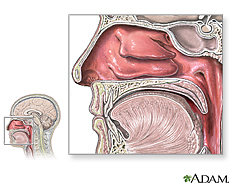
Sinusitis means your sinuses are infected or inflamed. Your sinuses are hollow air spaces within the bones surrounding the nose. They produce mucus, which drains into the nose. If your nose is swollen, this can block the sinuses and cause pain and infection.

Sinusitis can be acute, lasting for less than four weeks, or chronic, lasting much longer. Acute sinusitis often starts as a cold, which then turns into a bacterial infection. Allergies, pollutants, nasal problems and certain diseases can also cause sinusitis.

Symptoms of sinusitis can include fever, weakness, fatigue, cough and congestion. There may also be mucus drainage in the back of the throat, called postnasal drip. Treatments include antibiotics, decongestants and pain relievers. Using heat pads on the inflamed area, saline nasal sprays and vaporizers can also help.

Nose Disorders


Also called: Nasal disorders

Whether it's large or small, button-like or beak-like, your nose is important to your health. It filters the air you breathe, removing dust, germs and irritants. It warms and moistens the air to keep your lungs and tubes that lead to them from drying out. Your nose also contains the nerve cells that help your sense of smell. When there is a problem with your nose, your whole body can suffer. For example, the stuffy nose of the common cold can make it hard for you to breathe, sleep or get comfortable.

Many problems besides the common cold can affect the nose. They include

  • Deviated septum - a shifting of the wall that divides the nasal cavity into halves
  • Nasal polyps - soft growths that develop on the lining of your nose or sinuses
  • Nosebleeds
  • Rhinitis - inflammation of the nose and sinuses sometimes caused by allergies. The main symptom is a runny nose

Nasal Cancer


lso called: Cancer of the nasal cavity, Cancer of the paranasal sinus

Your paranasal sinuses are small hollow spaces around the nose. They are lined with cells that make mucus, which keeps your nose from drying out. The nasal cavity is the passageway just behind your nose through which air passes on the way to your throat as you breathe.

Cancer of the nasal cavity and paranasal sinuses is rare. Men are more likely than women to get it, and most patients are older than 45. There may be no symptoms at first, and later symptoms can be like those of infections. This means the cancer may not be found until it is advanced, making it harder to treat. Treatment options include surgery, radiation and chemotherapy.